Motorcyclists often struggle with slow cranking, short battery life, and unreliable performance, especially as traditional lead-acid batteries age. Many riders don’t know whether they should upgrade to a lithium (LiFePO4) or sodium battery, how these technologies differ, or which option actually suits their motorcycle. Questions like compatibility, safety, charging speed, and long-term cost make the decision even more confusing.
This guide addresses the pain points that matter most:
What battery technology truly delivers better performance—LiFePO4 or sodium?
Why lead-acid batteries fail prematurely and how LiFePO4 solves those issues
Whether a lithium upgrade is worth it in real-world riding conditions
How to choose the right lithium starting battery for your engine size and electrical system
By the end of the article, riders will understand exactly which battery technology fits their motorcycle, how to avoid common battery problems, and how to upgrade with confidence.
What Are the Advantages of Lithium (LiFePO4) Batteries and Sodium Batteries?
Lithium batteries offer the following 4 major advantages:
Compact size with high starting current output
Long service life with 3,000+ cycles
Wide operating temperature range: –20°C to 60°C
Stable, safe chemistry suitable for automotive starting applications
Sodium batteries offer the following 5 major advantages:
Compact size with high starting current output
Long service life with 3,000+ cycles
Even wider operating temperature range: –20°C to 80°C
Excellent capacity retention (>90%) under extreme temperatures
Highly tolerant to over-discharge and supports 0% state-of-charge recovery charging
Due to resource availability, sodium batteries are viewed as the long-term direction of battery technology, while lithium solutions serve more as a transitional phase.
Lead-Acid Problems? Switch to LiFePO4
Lithium(LiFePO4) and sodium batteries differ fundamentally from lead-acid batteries in both chemistry and performance. Lead-acid batteries generate power through reactions between lead plates and sulfuric acid, making them heavier, bulkier, and maintenance-dependent.
In contrast, LiFePO4 and sodium batteries are lighter, more compact, and maintenance-free, offering a more efficient and modern solution for today’s vehicles and power systems.
However, while lead-acid batteries remain widely used, many people experience the same recurring problems:
The vehicle feels heavy and sluggish. Lead-acid batteries add a lot of weight, which can make your bike feel less responsive.
Frequent power loss in cold weather. When temperatures drop, lead-acid batteries struggle to deliver enough cranking power, leaving you stuck on cold mornings.
Slow charging and long downtime. They take much longer to recharge, which means more waiting and less riding.
They wear out too quickly. Lead-acid batteries lose capacity fast and often need replacement far sooner than expected.
These pain points naturally bring us to the next question: what advantages do lithium starting batteries offer when used to replace lead-acid batteries?
LiFePO4 vs Lead-Acid: Benefits, Charging Speed, Lifespan, and Upgrade Guide
Replacing a lead-acid battery with a lithium (LiFePO4) starting battery brings several significant benefits, especially in terms of efficiency, and performance.
1. Vehicle feels heavy? Power drops fast? — Lithium makes it lighter, smoother, and more fuel-efficient. LiFePO4 batteries are much lighter than lead-acid batteries, reducing overall vehicle weight and improving fuel economy. Even more importantly, lithium delivers stable power output, allowing vehicles to start smoothly in all weather conditions.
2. Charging takes too long? Too much waiting? — Lithium gives you a faster charging experience
Starting-grade lithium batteries charge much faster than lead-acid batteries. Shorter charging cycles mean higher vehicle uptime, keeping you on the road instead of waiting beside a wall charger.
3. Replacing batteries too often? — Lithium lasts longer and handles stress better. A LiFePO₄ battery typically lasts 2–3 times longer than a lead-acid battery. It tolerates deep discharge far better, maintains consistent performance, and ensures reliable starts year after year—saving time, money, and frustration.
4. What to consider before switching to lithium battery? — Although lithium offers many advantages, a few important points should be evaluated before making the switch:
Cost difference:
Lithium batteries usually require a higher initial investment. However, their longer lifespan, higher efficiency, and near-zero maintenance make the total cost of ownership significantly lower over time. When choosing a battery, consider not just the upfront price but the long-term value.
Vehicle compatibility:
For best performance and safety, it is essential to choose a lithium battery that is compatible with your motorcycle or vehicle’s displacement, electrical system, and starting requirements. The right match ensures optimal starting performance and protects the entire electrical system for years to come.
What Do You Need to Know about the Right Lithium Starting Battery?
When picking a lithium starting battery for your vehicle, keep these simple points in mind:
Match the voltage and size of your vehicles
Make sure the battery fits your vehicle and provides the right power to start the engine.
Choose a trusted manufacturer brand
Go for a brand with a good reputation, solid warranty, and positive customer reviews.
Check compatibility
Double-check that the battery works with your vehicle’s electrical system so everything runs safely and smoothly.
If you have any questions or need assistance choosing a lithium starting battery, feel free to contact us today. Our team can help you find the supplier and product that fit your vehicle and your specific needs.
|
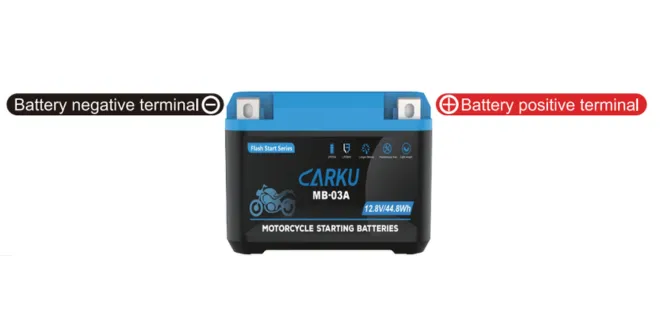
Model
|
MB-03A
|
EB-06
|
|
Peak Current
|
500A
|
600A
|
|
Capacity
|
3.5Ah
|
4.5Ah
|
|
Battery Type
|
LFP
|
LFP
|
|
Capacity
|
44.8Wh
|
57.6Wh
|
|
Applicable Motorcycle Types
|
Suitable for small to mid-displacement street bikes, sport bikes, and cruisers
|
Suitable for mid- to large-displacement motorcycles (street, sport, ADV, cruiser)
|
|
Compatible Engine Displacement
|
150cc–400cc
|
500cc–1000cc
|
|
Replacement for OEM Battery Capacity
|
7Ah–12Ah
|
10Ah–16Ah
|
|
Compatible Common Battery Models
|
YTX7L-BS / YTX9-BS
|
YTZ12S / YTX14-BS
|
Frequently Asked Questions
1. How long does a lithium starting battery typically last? Is it really more durable than lead-acid?
A high-quality lithium starting battery can last up to 10 years, depending on usage and maintenance. This is significantly longer than most traditional lead-acid batteries, making it a more reliable long-term choice.
2. Can I replace my current lead-acid battery with a lithium battery in my motorcycle or car?
Yes. As long as your vehicle’s electrical system is compatible with lithium technology, a lithium battery can directly replace a lead-acid battery. Many riders and drivers upgrade for better performance, lighter weight, and faster cranking.
3. Are lithium starting batteries environmentally friendly?
Lithium starting batteries have a smaller environmental footprint and are viewed as a greener choice overall. They offer higher energy efficiency, use fewer raw materials, and produce less waste compared to lead-acid batteries.
4. How should I maintain a lithium starting battery?
Maintenance is simple: Regularly monitor the battery’s voltage to ensure it stays within a healthy range. Make sure the battery connections stay clean and free from any buildup or corrosion. Confirm that your motorcycle’s charging system is working correctly to maintain battery health. Finally, proper care helps your lithium battery deliver peak performance throughout its lifespan.
5.Are lithium starter batteries a better long-term investment than lead-acid?
While the upfront cost is higher, lithium batteries offer longer lifespan, stronger cranking performance, faster charging, and better efficiency. Over the long run, they often have a lower total cost of ownership than lead-acid batteries.
6. How should I dispose of an old lithium battery?
Never dispose of lithium batteries with regular waste—incorrect handling can cause environmental damage, so they should be recycled properly.







 Jump Starter ODM/OEM Solutions
 Portable Power Station ODM/OEM Solutions
 Starting Battery ODM/OEM Solutions
 ABOUT CARKU
 STRENGTH FACTORY
 THE DEVELOPMENT HISTORY OF CARKU
 CORE COMPETITIVENESS
 COMPANY CULTURE
 QUALIFICATION
 CARKU News
 CARKU Exhibitions
 CARKU Battery Applications