


Discover why global brands partner with China’s portable power station manufacturers for advanced LiFePO4 engineering, flexible OEM development, efficient production, and worldwide distribution support.
Why Is China the Leading Country for Portable Power Station Manufacturing?
China’s portable power station industryhas evolved far beyond traditional contract manufacturing. Today, many leading suppliers operate as integrated energy solution partners, supporting everything from product development to large-scale manufacturing and global distribution.
This enables overseas brands to accelerate product launches while maintaining greater flexibility across different market segments. Supported by mature supply chains and large-scale manufacturing infrastructure, Chinese suppliers continue to play a central role in the global portable energy market.
Below are some of the most established portable power station manufacturers currently serving global distributors, private-label brands, and commercial energy markets.
Who Are the Top 10 Portable Power Station Manufacturers in China for OEM & ODM?
Different brands focus on different strengths, including OEM flexibility, battery engineering, inverter technology, certification capability, production scale, and overseas support.
The manufacturers listed below are not ranked in a fixed order, but selected based on their visibility, OEM/ODM capabilities, industry presence, and participation in global portable power station markets.
EcoFlow
Core strength: Inverter technology and fast-charging ecosystem
EcoFlow is widely recognized for its high-speed charging architecture, smart app ecosystem, and premium portable power station design strategy. The company has become one of the most influential brands in the global high-end portable energy market.
BLUETTI
Core strength: Large-capacity LiFePO4 backup systems
BLUETTI is known for expandable battery platforms, long-cycle LiFePO4 systems, and residential backup energy products targeting outdoor and emergency power applications.
CARKU
Core strength: OEM/ODM portable power integration
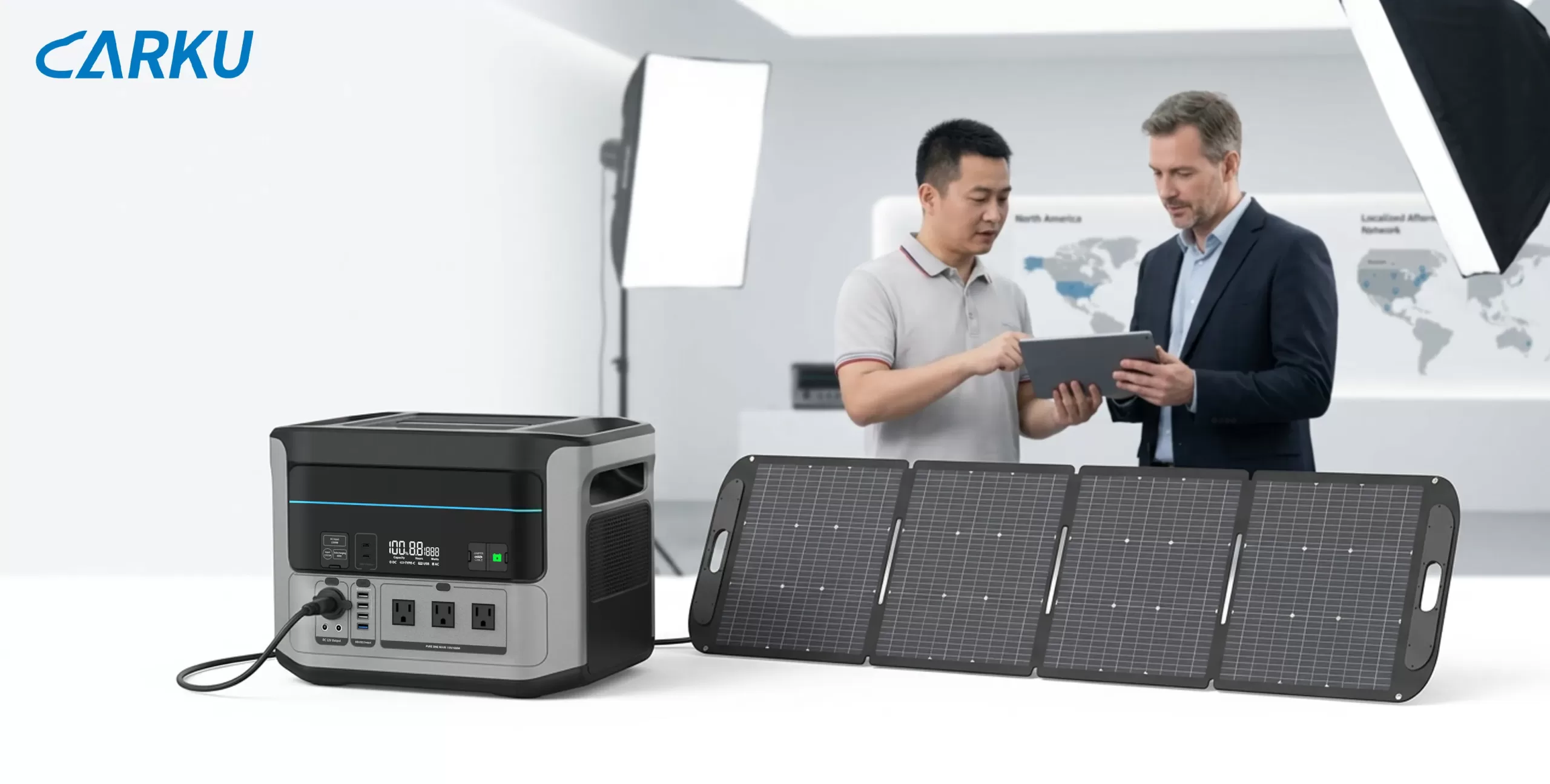
CARKU focuses on integrated OEM and ODM manufacturing for portable power stations solutions. Its portable energy products are also marketed under the VTOMAN brand, which focuses on consumer portable power stations and outdoor backup energy systems. The company combines battery pack engineering, SMT production, inverter integration, and flexible product customization to support global private-label and commercial energy projects.
SOUOP
Core strength: ODM portable power & solar hybrid solutions
SOUOP focuses on portable solar power systems designed for outdoor and backup energy applications.
Lipower Group
Core strength: Full-cycle ODM portable energy development
Lipower evolved from battery manufacturing into a full-line portable power station provider,offering portable energy platforms across multiple capacity categories.
Topure Power
Core strength: Integrated energy storage system design
Topure Power focuses on portable and residential energy storage solutions with strong OEM/ODM development capability and global project support.
VIPTEK
Core strength: Small-batch OEM manufacturing flexibility
VIPTEK specializes in white-label portable power station production, particularly for distributors and new market entrants requiring flexible order volumes.
Bicodi
Core strength: Cross-border OEM/ODM customization
Bicodi works closely with cross-border e-commerce and private-label energy brands.
Powkey
Core strength: Integrated OEM production & assembly capability
Powkey operates full SMT and assembly lines for portable power stations and solar generators.
Delong Energy
Core strength: Factory-based portable energy production
Delong Energy focuses on OEM portable power stations and outdoor energy systems with standardized production and cost-efficient manufacturing.
What Are the Typical MOQ and OEM Customization Options for Portable Power Stations?
From an OEM/ODM manufacturing perspective, companies like CARKU represent the flexible production model commonly seen across China’s portable power station industry. Rather than applying a fixed MOQ standard, most manufacturers adjust requirements based on product complexity, battery architecture, certification scope, and customization level — with standard projects offering more accessible entry volumes, while fully customized ODM programs require higher MOQs due to additional development and certification requirements.
Table:Typical MOQ Reference by Product Segment
|
Product Category |
Common Power Range |
Typical MOQ Range |
Suitable For |
|
Entry-Level Models |
300W~600W |
500~1000 units |
Retail testing, e-commerce brands, starter OEM projects |
|
Hot-Selling Models |
1000~2000 units |
Established distributors, outdoor & RV markets |
|
|
Large-Capacity Models |
3600W and Above |
2000+ units |
Energy backup, professional applications |
Typical OEM/ODM customization options include:
▶Battery capacity and cell configuration (e.g., LiFePO4 systems)
▶Inverter output power and port configuration (AC/DC/USB-C layout)
▶Structural design (housing, durability level, and industrial design changes)
▶Firmware and BMS customization for protection logic and performance control
▶Branding elements including logo, packaging, and UI interface
▶Solar charging compatibility and multi-device integration
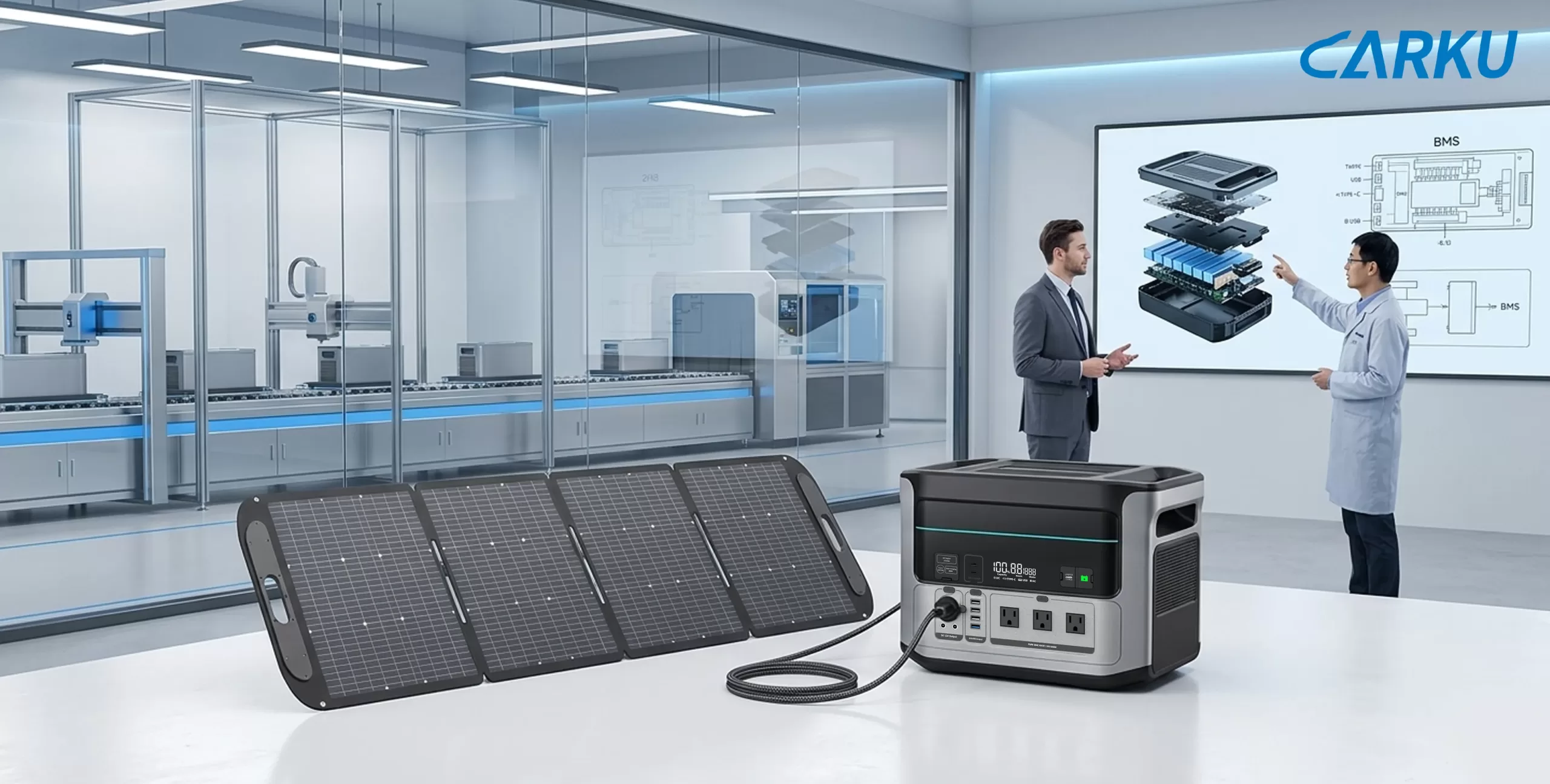
Through its VTOMAN product line and international retail distribution channels, CARKU reflects how Chinese manufacturers are expanding from OEM production into globally distributed portable energy brands.
How To Choose A Reliable Portable Power Station Supplier in China for OEM & ODM Projects?
Choosing the right OEM/ODM portable power station supplier is not just about price or capacity. The right manufacturing partner should combine product reliability, technical support, and international delivery experience.
1.Certifications & Quality Systems
A reliable portable power station supplier should meet key international standards, including CE, FCC, UN38.3, RoHS, and UL. More importantly, compliance should be embedded in product development—covering battery validation, thermal testing, and quality control—to ensure faster certification and consistent product quality.
2.Integrated Engineering Capability
Strong OEM/ODM suppliers typically provide integrated development capabilities covering battery systems, power electronics, firmware optimization, and product testing.
3.Global Fulfillment & Support
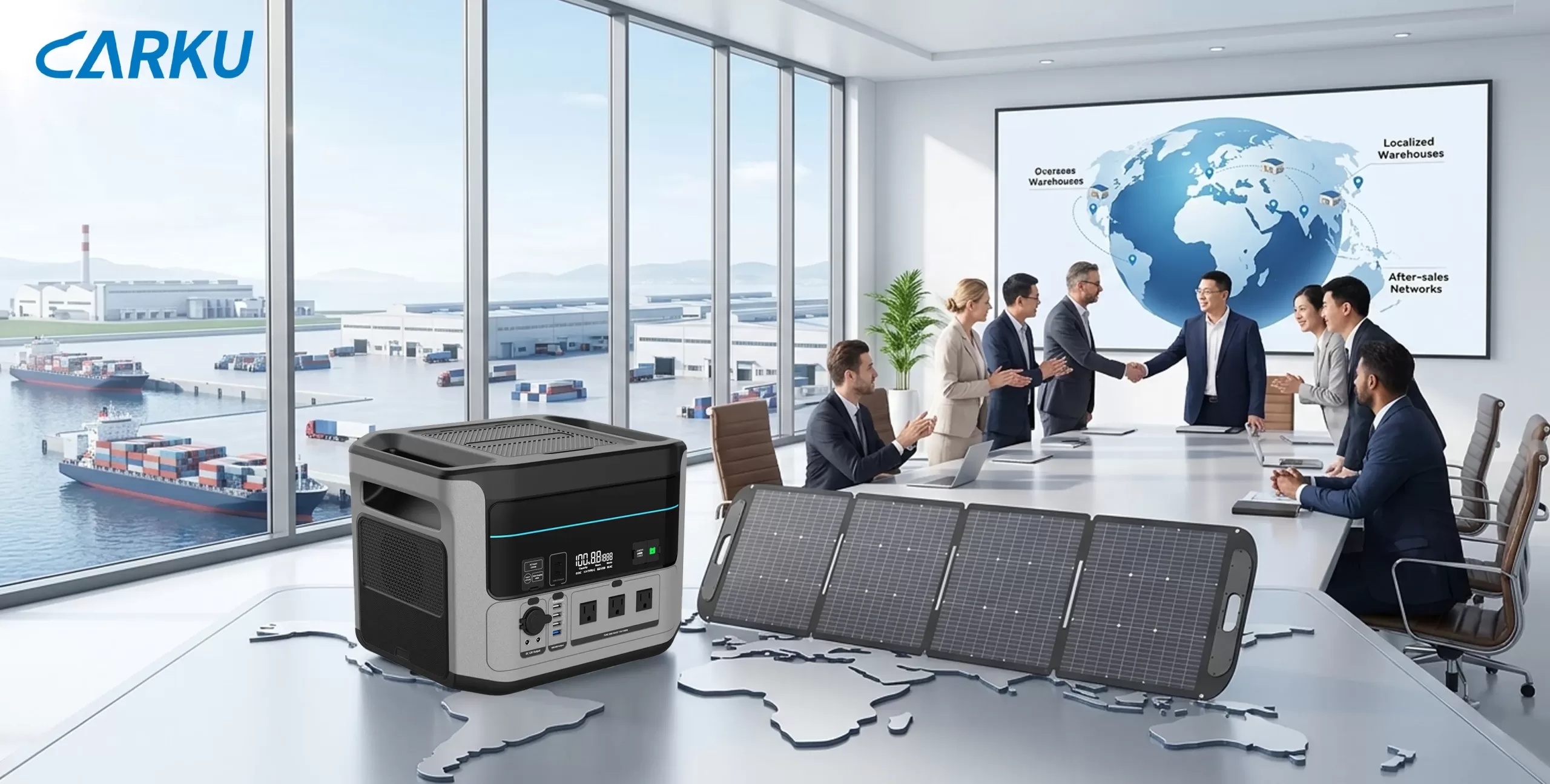
Established suppliers provide overseas warehousing, flexible logistics, export coordination, and after-sales support. This ensures efficient global distribution and better service for international partners.
Manufacturers like CARKU demonstrate this shift toward integrated global energy solution providers, supporting long-term cooperation for international energy brands and distributors.
Frequently Asked Questions
Q1: How is the cost of an OEM portable power station calculated?
A: Cost is usually based on battery capacity, inverter power, cell brand, casing material, and the order quantity (MOQ), plus any extra features like wireless charging or fast-charging ports.
Q2: What information do I need to get an accurate quotation from a portable power station manufacturer?
A: You typically need to provide your target capacity (Wh), rated output power (W), certifications required, expected order quantity, and whether you need OEM branding or customized features.
Q3: Why do quotations from different portable power station suppliers vary so much?
A: Differences often come from the cell type and brand used, BMS design, warranty terms, quality control level, and whether the supplier is a factory or a trading company.
Q4: How can I reduce the unit cost of my portable power station order?
A: Increasing order quantity, simplifying customization (color, packaging, accessories), and choosing standard models instead of fully new designs usually help lower the unit price.